Peter Lobner, 3 October 2026
S-Class submarines were the first class of U.S.-designed subs procured in significant numbers. Fifty-one were commissioned by the Navy between 1920 – 1925. These subs had an overall length of 219’, a maximum beam of 20.6 ’, and displaced 854 tons surfaced / 1,062 tons submerged. The subs were armed with one 4” gun on the forward deck and four bow-mounted 21” torpedo tubes for WW I-vintage Mk10 torpedoes (shorter than later Mk14 torpedoes). This class of sub lacked radar and air-conditioning. With a crew of 42 and a range of 5,400 nautical miles, the S-class subs could operate, for the first time, over trans-oceanic distances.
Thirty seven S-Class subs were in service at the start of WW II, and these subs were credited with sinking 42 Japanese ships. As newer, larger fleet-class submarines entered into service during WW II, S-class subs were withdrawn from combat service and assigned to training and other support roles. Starting in late 1944, S-class subs were decommissioned before the end of WW II.
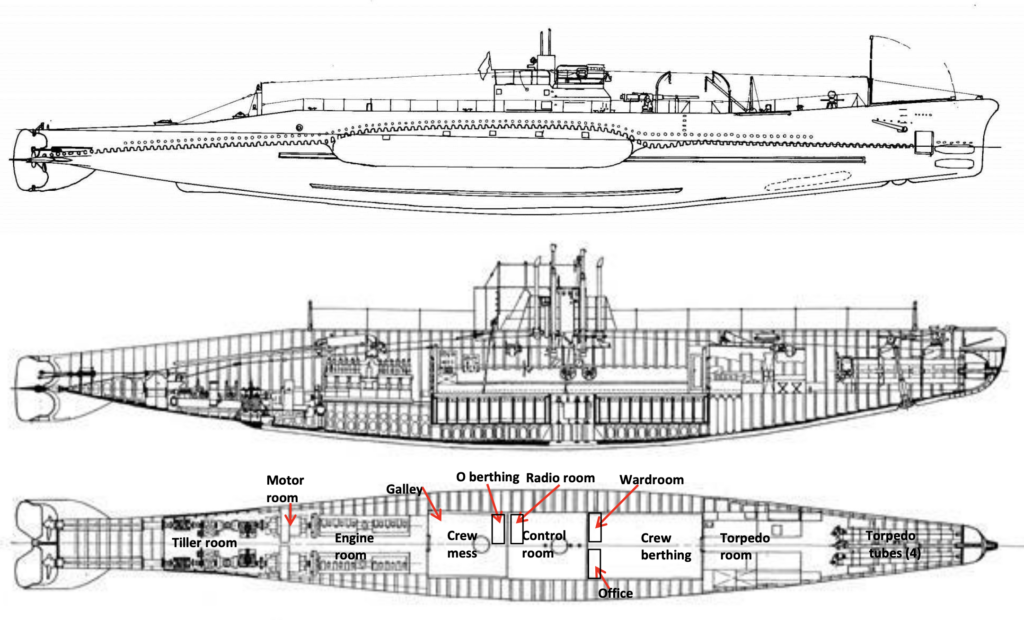
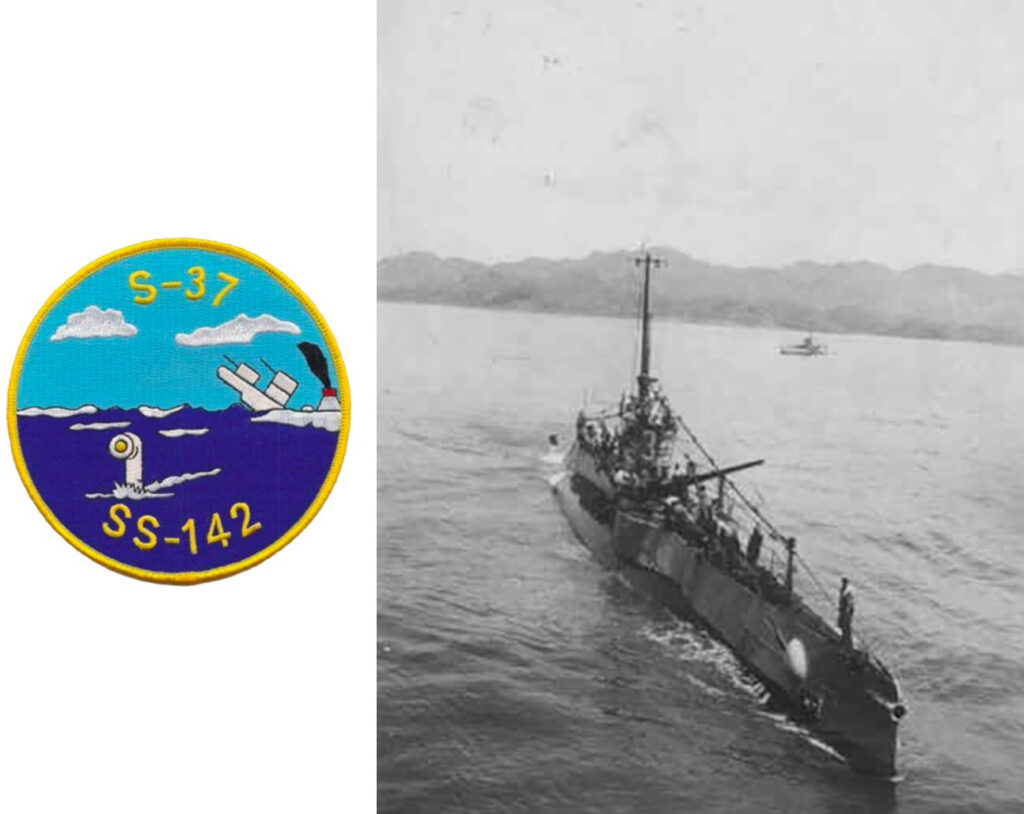
The S-37 (aka SS-142) was the 37th S-class submarine. Its keel was laid down at Union Iron Works in San Francisco, CA, on 12 December 1918, launched on 20 June 1919, and commissioned four years later on 16 July 1923. During WW II, S-37 earned five battle stars and also earned her place in naval history for the first-ever Japanese destroyer kill of WW II.
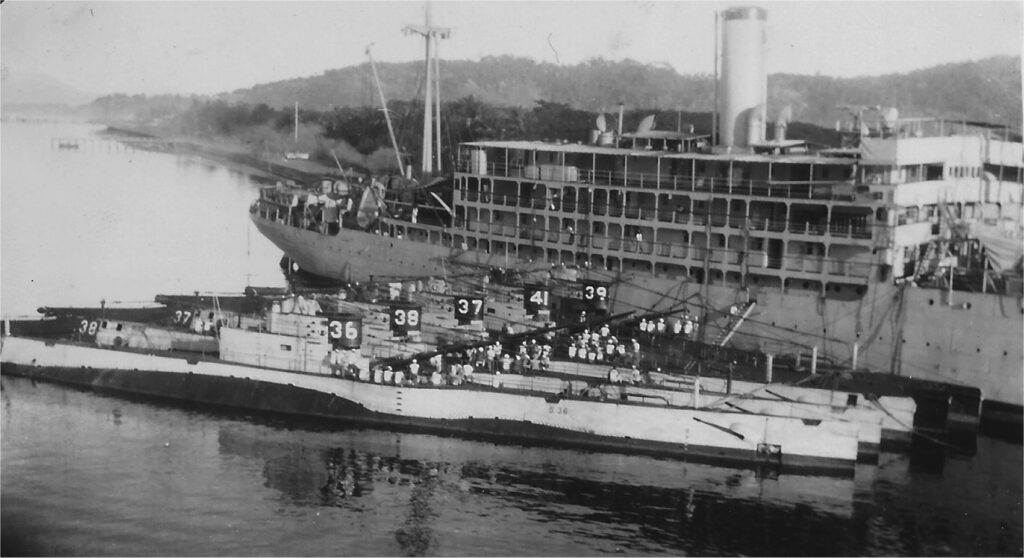
circa 1926 with most of the Asiatic Fleet’s Submarine Squadron Five alongside.
Source: NAVSOURCE (from Hyman Fischer photo album).
S-37 was decommissioned on 6 February 1945, before the end of WW II. Two weeks later, on 20 February 1945, S-37 sank in 40 – 50 feet of water in the Pacific Ocean off the coast of Imperial Beach, CA, after her tow line broke while she was being towed to sea to be used as a target. There were no efforts to recover the sub and S-37 was formally removed from the Naval Vessel Register (”stricken”) on 23 February 1945.
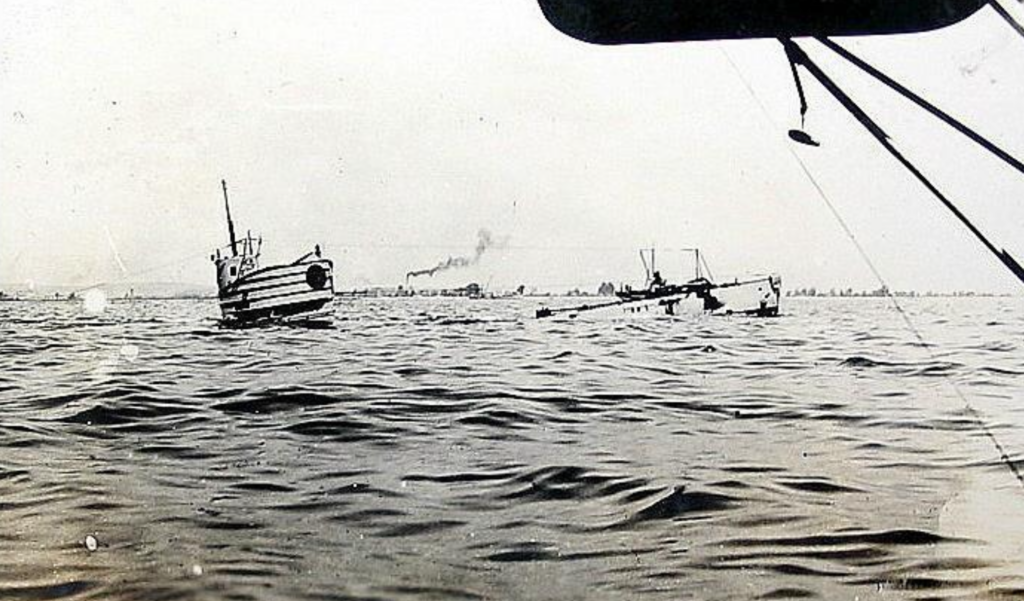
Source: ATC “S-37 Day” briefing package, 2016
The wreck of the S-37 was rediscovered in 1958 by scuba divers Frank Ball and Robert Gowdy. Their salvage efforts succeeded in recovering several items, including the sub’s two brass propellers, before being preempted by the Navy. You can read a story about their salvage operations here.
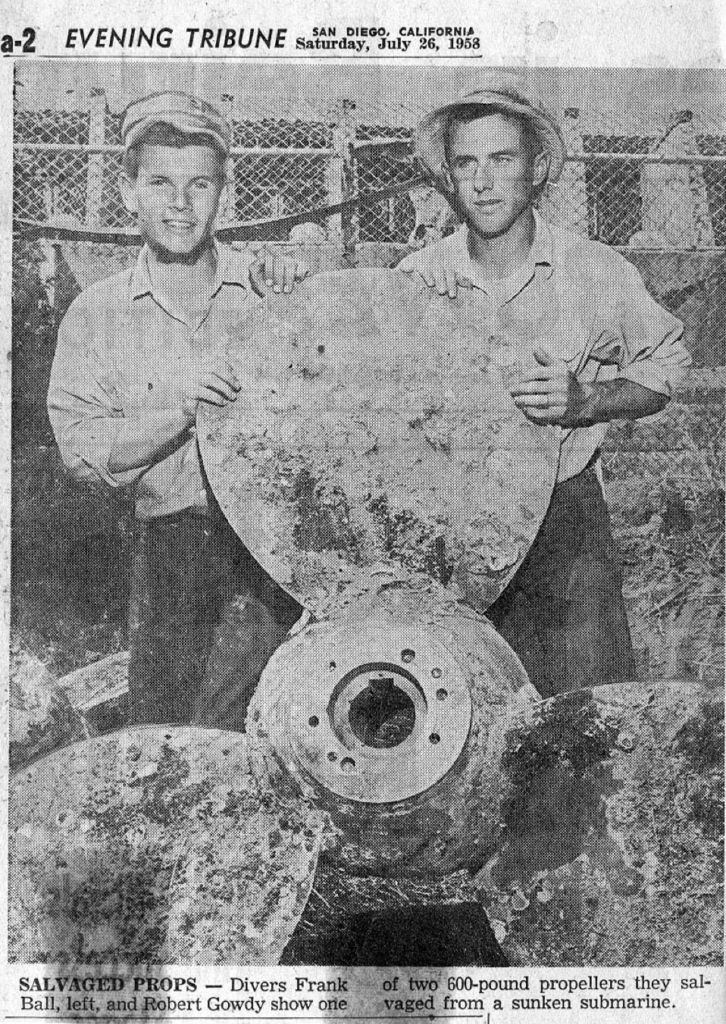
Source: San Diego Evening Tribune, 26 July 1958
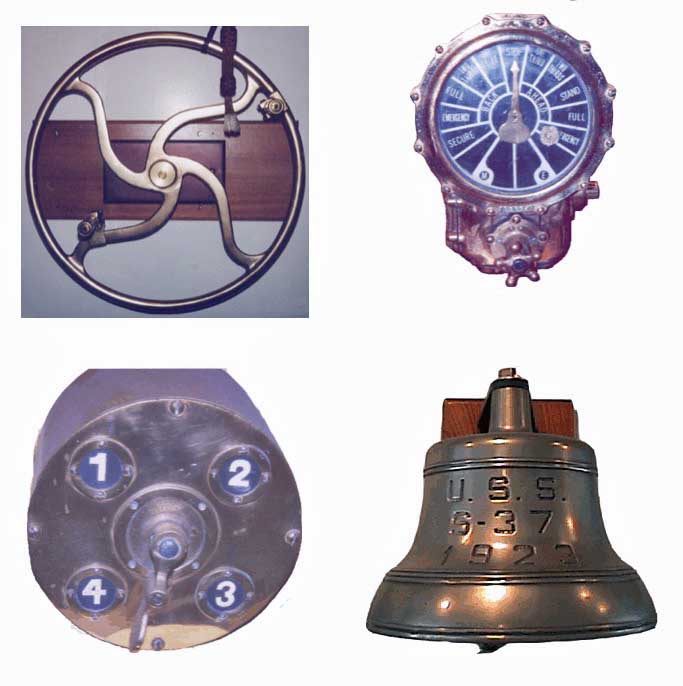
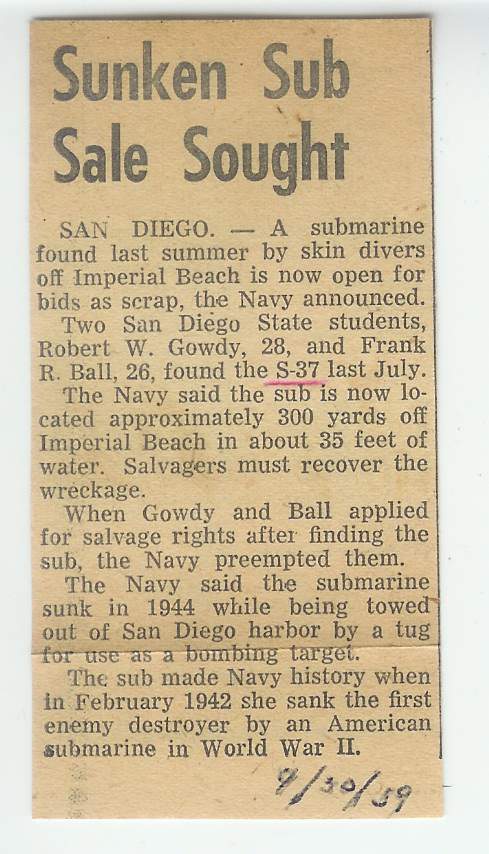
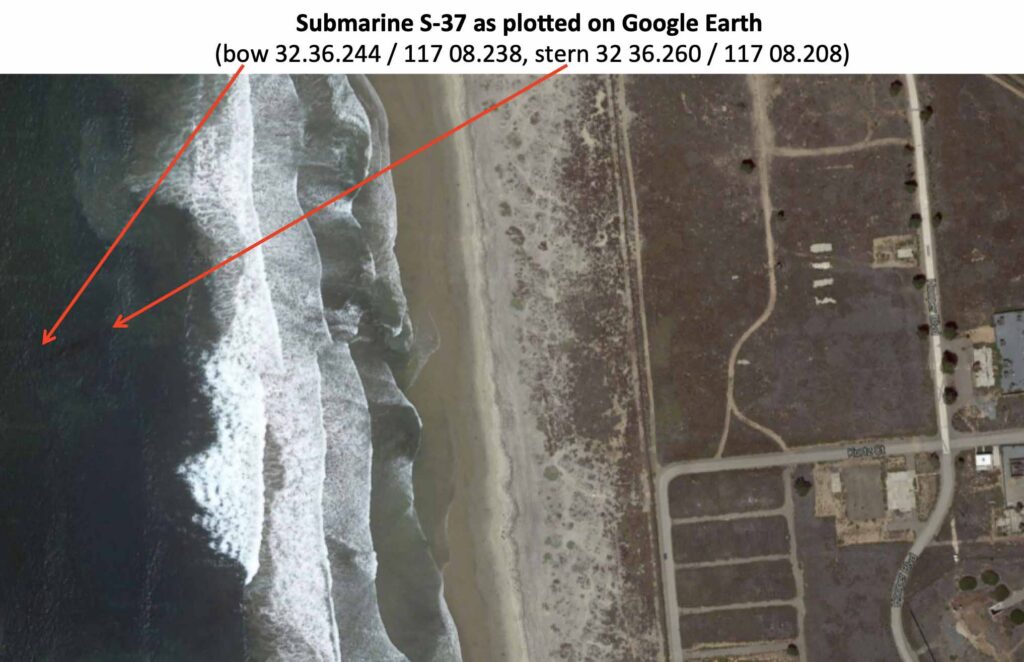
After being sold as scrap, “as is, where is,” by the Navy, a salvage team led by diver Jim Reeder briefly raised the S-37 to the surface on 8 October 1963, before it again sank, this time in about 30 feet of water, about 1,000 feet offshore from the Navy SEAL’s Silver Strand Training Complex (SSTC).
In 1980, the S-37 was “rediscovered” by members of California Wreck Divers and has been dived ever since. The Navy’s SEALs also have used the S-37 wreck site for training with their Iver-series of Autonomous Underwater Vehicles (AUVs), which can be used for a variety of functions such as bathymetric seafloor mapping, reconnaissance, and mine-hunting.
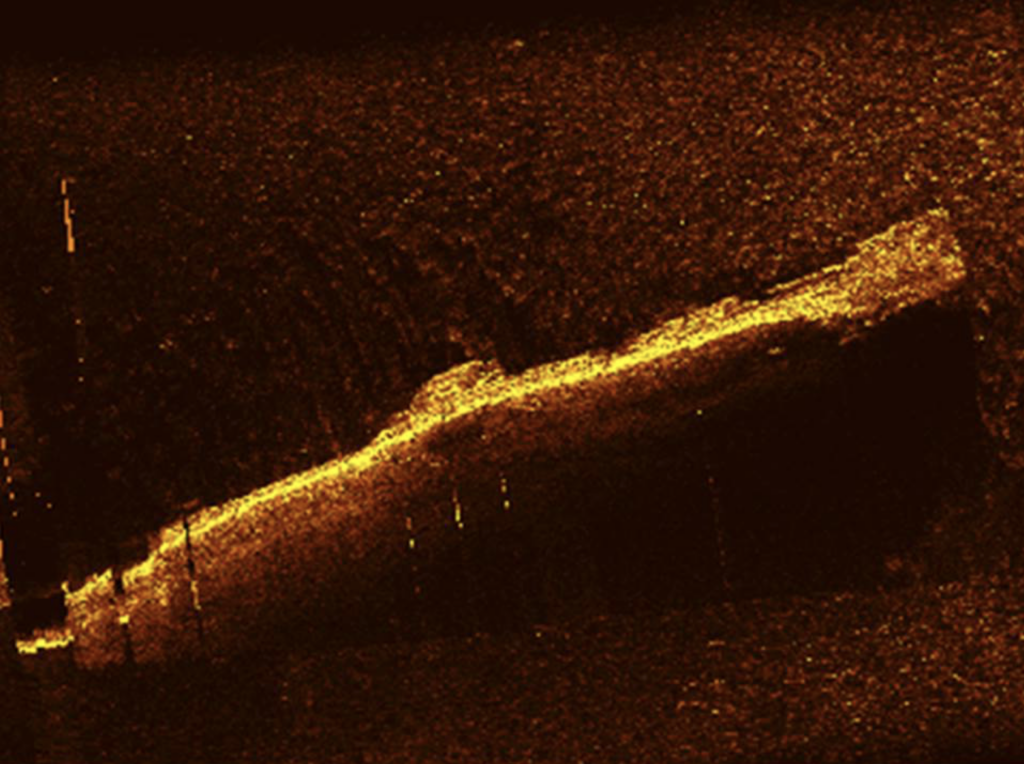
California Wreck Divers reports, “The S-37 lies almost 90 degrees to shoreline, with its bow nearly buried in the sand. It has a 20-30 degree list to port and the conning tower will break the surface at low tides or high surf. For many years, the growth on the hull was minimal and the details of the sub were easy to identify. However, after San Diego’s sewer line broke about a decade ago, several inches of mussel shells have blanketed the wreck. Although the sewer pipe was fixed long ago, the mussels now feed on the (continuing sewage) outflow of the Tijuana River. Visibility on the wreck is usually poor due to its proximity to the surf line. The wreck is inaccessible from the shore and must be reached by boat.”
A 2016 Navy SEAL’s Advanced Training Command (ATC) “S-37 Day” briefing package includes many historical photos of the S-37 as well as contemporary photos of the encrusted hull.
For more information
- Advanced Training Command (ATC) “S-37 Day” briefing package, 26 February 2016: https://lynceans.org/wp-content/uploads/2026/10/ATC-S-37-Day-briefing-package_26Feb16.pdf
- “Submarine S-37 as Plotted on Google Earth,” Coronado Historical Association: https://coronadohistory.org/static/media/uploads/historical%20coronado/Coronado%20Heights/s-37_location_at_sstc.pdf
- Ed Davies, “Salvaging scrap from San Diego bay: valves, shafts, propellers, heat exchangers, fire-fighting nozzles, running lights, bells, plumbing fixtures, pipes take it from the bottom,” San Diego Reader, 12 May 1988: https://www.sandiegoreader.com/news/1988/may/12/salvage-scrap-san-diego-bay/
- Bob Owens, “Submarines lying close off San Diego beaches, including the amazing S-37, lie down in darkness,” San Diego Reader, 10 September 1992: https://www.sandiegoreader.com/news/1992/sep/10/lie-down-darkness/
- Frank Ball, “A Submarine Incident,” http://cawreckdvers.org/Wrecks/Submarine.pdf
- “S-37,” California Wreck Divers: http://cawreckdivers.org/Wrecks/S37.htm
- “USS S-37,” Wikipedia: https://en.wikipedia.org/wiki/USS_S-37
- “S-37 (SS-142),” NavSource Online: Submarine Photo Archive: https://www.navsource.net/archives/08/08142.htm
- “S-37,” PigBoats: https://pigboats.com/S-37
- “S-37,” (with an incorrect statement about the S-37’s demise), Naval History and Heritage Command, 1 September 2015: https://www.history.navy.mil/research/histories/ship-histories/danfs/s/s-37.html
Video
- “U.S.S. S-37 ‘The Forgotten Warrior’,” (28:14 min), posted by Storied Treasures, 7 December 2021: https://www.youtube.com/watch?v=P7-whWzHJhU